
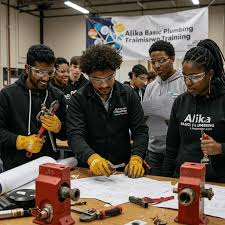
Complete Guide: Legitimate Plumbing Courses in South Africa for Young Aspiring Plumbers
Thank you for reading this post, don't forget to subscribe!Introduction
Are you a young South African looking to build a stable, rewarding career in plumbing? With the country facing a shortage of skilled artisans and plumbing remaining an essential trade, now is the perfect time to pursue plumbing training. This comprehensive guide will help you find legitimate, accredited plumbing courses across South Africa, understand the requirements, and navigate your path to becoming a certified plumber.
Why Choose a Career in Plumbing?
Plumbers in South Africa can earn between R15,000 to R30,000 per month, with experienced professionals and business owners commanding even higher salaries. The plumbing industry offers job security, entrepreneurial opportunities, and the chance to work on diverse projects from residential homes to large commercial developments.
Key Qualification: Red Seal Certification
The Red Seal (Section 26D) trade test certificate is the gold standard for plumbers in South Africa and is internationally recognized. The plumbing trade test can be written after having at least 3-4 years of working experience.
Entry Requirements for Plumbing Courses
Basic Requirements for Apprenticeships:
- Minimum Age: 16 years old
- Education: Grade 9 Certificate (NQF Level 1), though some employers prefer higher qualifications
- Subject Requirements: Good results in Mathematics
- Skills: Ability to understand plumbing theory and basic mathematics
Requirements for ARPL (Recognition of Prior Learning):
- Minimum Age: 19 years old
- Experience: At least 3 years of plumbing experience
- Documentation: Proof of work experience and portfolio of evidence
Top Legitimate Plumbing Training Institutions in South Africa
Apply now Legitimate Plumbing Courses in South Africa for Young Aspiring Plumbers join us 2026
IOPSA-Approved Private Training Colleges
These institutions are approved by the Institute of Plumbing South Africa (IOPSA) and offer quality, accredited training:
1. Monster Plumbing College
- Location: Cape Town and Pretoria
- Programs Offered: NQF Level 4 training aligned with South African National Standards (SANS), including a 3-month theory and practical training program plus 3 months workplace experience
- Entry Requirements: At least Grade 9 prior schooling or 16 years of age
- Special Features: Partnership with Monster Plumbing CC for real-world training; Section 26D Trade Test assistance
- Website: https://www.plumbingcollege.co.za/
2. PCD College
- Location: Pretoria, Gauteng
- Programs Offered:
- Basic Plumbing Course
- Advanced Plumbing Course
- Full Occupational Qualification Plumbing
- Pre-Trade Preparation Course
- ARPL (Artisan Recognition of Prior Learning)
- Special Features: Weekly course starts, accommodation, meals, shuttle, and student support included
- Website: https://pcdcollege.co.za/
3. NewGen Trade Schools
- Location: Cape Town
- Programs Offered: NQF Level 4 Plumbing Course (3-month or 36-month options)
- Entry Requirements: Ages 15-19
- Special Features: International accreditation, business skills training, assistance with accommodation
- Website: https://newgentradeschools.co.za/plumbing-course-2
4. Tjeka Training Matters
- Location: Krugersdorp, Gauteng
- Contact: 011 665 2777
- Email: frans@tjeka.co.za
- Website: www.tjeka.co.za
5. Africa Skills Village Training and Management Services
- Location: George, Southern Cape
- Contact: 044 884 0791
- Email: info@africaskills.co.za
- Website: www.africaskills.co.za
6. Plumbing Academy KZN
- Location: Port Shepstone, KwaZulu-Natal
- Contact: 081 301 4803
- Email: admin@kznpa.co.za
7. Nomanzi Trade College
- Location: Cape Town and Pretoria
- Specialization: Trade test preparation and ARPL
- Special Features: Classes begin every Monday, offering trade test preparation courses for experienced plumbers
- Website: https://nomanzitradecollege.co.za/
Public TVET (Technical and Vocational Education and Training) Colleges
TVET colleges offer affordable, government-subsidized plumbing programs:
1. Northlink College
- Location: Belhar, Cape Town
- Programs Offered: Competency Based Modular Training (CBMT) for plumbers, which is the first stage toward attaining artisan status
- Contact: 082 904 3038
- Email: hsnyders@northlink.co.za
- Website: www.northlink.co.za
- Application: Apply online at https://www.northlink.co.za/course/cbmt-plumber/
2. Majuba TVET College
- Location: KwaZulu-Natal (multiple campuses)
- Programs Offered: Plumbing levels 1-4, each increasing in complexity
- Course Duration: Plumbing 1 is 20 days, Plumbing 2 is 20 days, Plumbing 3 is 25 days, and Plumbing 4 is 30 days
- Website: https://www.majuba.edu.za/artisan-courses/plumbing/
3. College of Cape Town
- Location: Cape Town
- Contact: 021 404 6700
- Email: info@cct.edu.za
- Website: www.cct.edu.za
4. Flavius Mareka TVET College
- Location: Sasolburg
- Contact: 016 976 0829
- Email: smitg@fmfet.net
- Website: www.flaviusmareka.net
5. Ekurhuleni East College
- Location: Springs, Gauteng
- Contact: 011 730 6600
- Email: gardnerd@eec.edu.za
- Website: www.eec.edu.za
6. Ikhala TVET College
- Location: Eastern Cape
- Entry Requirements: Grade 9 with 40% pass in Mathematics, Physical Science and English
- Website: https://ikhala.edu.za/courses/civil-engineering-bricklaying-carpentry-plumbing/
7. Elangeni TVET College
- Location: KwaZulu-Natal
- Website: https://www.elangeni.edu.za/learning_programmes/plumbing/
8. Lovedale TVET College
- Location: Eastern Cape
- Programs Offered: N1-N3 Plumbing
- Website: https://www.lovedale.edu.za/n1-n3-plumbing.php
Other Accredited Institutions
1. BluLever Education
- Programs Offered: 3-year QCTO-accredited plumbing apprenticeship
- Special Features: Red Seal certification, structured learning blocks, bursary options available
- Website: https://www.blulever.com/apply-plumbing
2. Varsity Institute of Science and Technology (VISTECH)
- Location: Braamfontein, Johannesburg
- Contact: +27 (0)11 052 6639
- Email: info@vistech.co.za
- Website: https://www.vistech.co.za/Plumbing.html
3. Mogolo Academy
- Programs Offered: Advanced Plumbing Course
- Website: https://mogoloacademy.com/courses/advance-plumbing-2/
How to Access Plumbing Courses
Step 1: Determine Your Route
Decide whether you’ll pursue a full apprenticeship (if you’re starting fresh) or ARPL (if you have existing experience).
Step 2: Choose Your Institution
Select a training provider based on:
- Your location
- Course offerings
- Accreditation status
- Costs and payment options
- Reputation and industry connections
Step 3: Prepare Required Documents
Typically, you’ll need:
- Certified copy of your ID
- Certified copies of educational certificates (Grade 9 or higher)
- Proof of residence
- Recent passport-sized photographs
- CV (for some institutions)
Step 4: Apply
- For TVET Colleges: Applications typically open in specific periods (usually mid-year for the following year). Visit the college website or campus to apply.
- For Private Colleges: Many accept applications year-round, with some offering weekly or monthly intakes.
Step 5: Explore Funding Options
- NSFAS (National Student Financial Aid Scheme): Available for TVET college students
- Company Bursaries: Some employers sponsor apprentices
- SETA Funding: Construction Education and Training Authority (CETA) provides funding
- Private Bursaries: BluLever offers the Future Artisan Bursary for eligible students
- Student Loans: Options available through providers like Student Hero
Course Duration and Structure
Full Apprenticeship Programs:
- Duration: 3-4 years
- Structure: Combination of theoretical classes and practical on-the-job training
- Theory Component: NATED N1-N3 Certificate in Plumbing or NQF Level 4 qualification
- Practical Component: 54 weeks plant training working alongside experienced artisans
Short Courses:
- Duration: 3-6 months
- Purpose: Skills development or preparation for trade tests
- Note: Short courses alone don’t lead to full certification
ARPL Route:
- Duration: Ten to fifteen working days, depending on applicant experience and pre-assessment outcomes
- Process: Compile proof of evidence, undergo assessment, receive gap training if needed, complete trade test
The Trade Test Process
To become a certified plumber, you must pass the Section 26D Trade Test:
Requirements:
- Completion of formal training and at least three years of plumbing experience
- Registration with an accredited Trade Test Centre
Test Components:
- Written Exam: Covers safety, tools, materials, installation methods, and SANS regulations
- Practical Exam: Complete tasks like soldering, joining pipes, installing fixtures
Registration:
After passing, you must register with:
- PIRB (Plumbing Industry Registration Board): For legal practice authorization
- IOPSA (Institute of Plumbing South Africa): For professional recognition (optional but beneficial)
Government-Supported Apprenticeship Opportunities
MISA Apprenticeship Programme
The Municipal Infrastructure Support Agent offers structured three-year learnerships for TVET graduates and qualified candidates, placing them with municipalities.
Application Process:
- Visit www.misa.gov.za or www.cogta.gov.za
- Download the MISA application form
- Submit with CV, certified qualifications, ID copy, and proof of residence
Tips for Success
- Research Thoroughly: Verify that your chosen institution is accredited by CETA, QCTO, or IOPSA
- Visit Campuses: Where possible, tour facilities to assess training equipment and workshops
- Talk to Alumni: Connect with graduates to learn about their experiences
- Consider Location: Choose a college near where you live or are willing to relocate
- Check Industry Connections: Institutions with employer partnerships can help with job placement
- Stay Committed: Plumbing training requires dedication, physical fitness, and problem-solving skills
- Network Early: Join professional bodies like IOPSA to access resources and opportunities
Career Prospects After Qualification
Once certified, you can:
- Work for plumbing companies or contractors
- Join construction firms
- Specialize in areas like solar water heating, heat pumps, or industrial plumbing
- Start your own plumbing business
- Work internationally (Red Seal is recognized globally)
- Advance to supervisory or management roles
Additional Resources
Professional Bodies:
- Institute of Plumbing South Africa (IOPSA): www.iopsa.org | Contact: 08610 75862
- Plumbing Industry Registration Board (PIRB): https://www.pirb.co.za/registration/
- Construction SETA (CETA): For apprenticeship contracts and funding
Finding Apprenticeships:
Visit IOPSA’s website to find member companies offering apprentice programs: www.iopsa.org/How-to-become-a-plumber
Conclusion
Pursuing a plumbing career in South Africa offers excellent prospects for young people seeking stable, well-paying work. With numerous accredited training options available across all provinces, both through affordable TVET colleges and specialized private institutions, you have many paths to qualification.
Remember that becoming a certified plumber requires commitment and hard work, but the investment pays off through job security, competitive salaries, and the opportunity to build your own business. Start by contacting the institutions that best match your needs, prepare your documents, and take the first step toward a rewarding career in this essential trade.
The plumbing industry needs skilled young professionals like you. With the right training and dedication, you can build a successful career while contributing to South Africa’s infrastructure development and water security.
Ready to start your plumbing journey? Contact the institutions listed above, visit their websites, and begin your application today!
Understanding Plumbing Qualifications in South Africa
Two Main Pathways to Becoming a Qualified Plumber
1. Apprenticeship Route (3-4 Years) This involves a blend of practical work experience with theoretical training, typically taking three to four years to complete.
2. Artisan Recognition of Prior Learning (ARPL) If you already have practical plumbing experience, ARPL allows you to gain formal certification based on your existing skills.
Discover more from More Jobs You Can Apply
Subscribe to get the latest posts sent to your email.